
Last updated 26 March 2026 ·


Fast-growing businesses don’t just move quickly - they stretch leaders in ways that more stable environments rarely do. Teams expand before processes are fully defined, priorities shift mid-quarter, and expectations from investors and customers rarely slow down. In this kind of environment, leadership stops being about oversight and becomes something far more nuanced: creating clarity where there is ambiguity, building trust at speed, and putting in place systems that can scale without breaking.
What separates effective leaders in these conditions isn’t personality or authority. It’s their ability to keep people aligned and engaged while the ground is constantly moving beneath them. They create focus without rigidity, accountability without micromanagement, and momentum without burnout. That balance is difficult - but it’s what defines leadership in a scale-up.
The Reality of Leading in a Scale-Up
Growth sounds exciting on paper, but in practice it introduces a level of complexity that can quickly spiral if not managed well. New hires join faster than culture can naturally absorb them, roles evolve before they’re fully understood, and communication becomes noisier as more channels emerge.
Leaders often find themselves juggling multiple pressures at once. One moment they’re aligning on long-term strategy, and the next they’re resolving short-term execution issues. Priorities don’t just change - they compete. Without a strong leadership approach, this environment can lead to confusion, duplicated effort, and teams quietly losing direction.
The real challenge isn’t growth itself. It’s maintaining coherence while everything expands.
What Great Leadership Looks Like (When Things Are Moving Fast)
In high-growth environments, certain leadership traits consistently rise to the surface - not because they’re trendy, but because they’re necessary.
Clarity is the foundation. When everything is changing, people need something stable to anchor to. Strong leaders constantly reinforce the bigger picture: where the business is going, what matters right now, and how each person contributes to that direction. This isn’t a one-time communication - it’s ongoing, repeated, and embedded into everyday work.
Trust replaces control. Leaders who try to hold onto every decision quickly become bottlenecks. Instead, high-performing teams are built on clear frameworks and shared understanding, not constant oversight. When people know the goals and boundaries, they can move faster - and often make better decisions closer to the work.
Consistency becomes a signal. In a constantly shifting environment, people look to leaders for stability. Regular check-ins, predictable feedback, and steady expectations create a sense of psychological safety. Even when strategies evolve, the way leaders show up shouldn’t feel erratic.
At the same time, great leaders lean heavily into feedback. Not as a formal process that happens once or twice a year, but as a continuous loop woven into daily work. Small wins are recognised, course corrections happen early, and performance conversations feel like guidance rather than judgement.
And underpinning all of this is focus. Growth creates endless opportunity - but also endless distraction. Leaders who succeed are the ones who can say “no” as clearly as they say “yes,” ensuring their teams are working on what actually drives impact.
Making Leadership Practical (Not Just Aspirational)
It’s easy to talk about leadership qualities in theory, but the real test is how they show up in day-to-day operations.
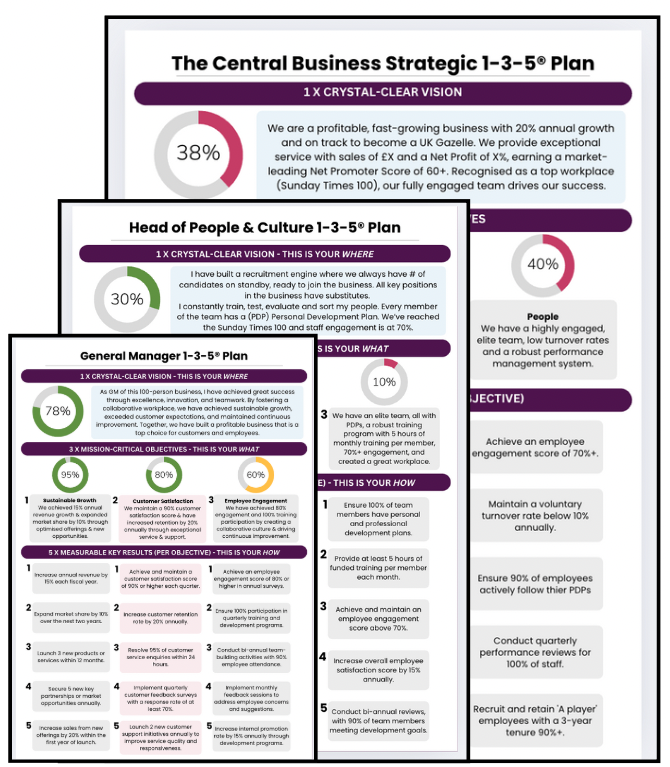
In practice, effective leaders create lightweight structures that keep teams aligned without slowing them down. Meetings, for example, become sharper and more intentional - short check-ins that clarify priorities rather than long discussions that drain energy. Goals are visible, not hidden away in documents, so everyone understands progress and accountability in real time.
Ownership is another key shift. Instead of centralising decisions, leaders distribute responsibility across the team, trusting individuals to lead their areas while maintaining visibility at a higher level. Alongside this, regular reflection becomes part of the rhythm - taking time to assess what’s working, what isn’t, and what needs to change next.
These aren’t complex systems. But they are deliberate.
Where Leaders Often Go Wrong
Even experienced leaders can struggle when growth accelerates. The most common issues aren’t dramatic - they’re subtle, and they build over time.
Sometimes it’s an overload of priorities, where everything feels important and teams end up stretched too thin. In other cases, it’s the opposite problem: too much delegation without enough visibility, leaving leaders disconnected from what’s actually happening on the ground.
Feedback can also become inconsistent. When recognition or guidance is delivered sporadically, it creates uncertainty rather than motivation. And perhaps most quietly, culture can begin to dilute - not because anyone intended it to, but because it wasn’t actively reinforced as the team expanded.
None of these problems appear overnight. But left unchecked, they compound quickly.
Leading Through Constant Change
Change is unavoidable in a scale-up, but how it’s handled makes all the difference. People don’t resist change as much as they resist confusion.
Strong leaders take the time to explain not just what is changing, but why it matters. They connect new processes or priorities back to the bigger picture, helping teams see the logic rather than just the disruption. And importantly, they don’t leave people to figure it out alone - they provide the tools, structure, and support needed to adapt.
When done well, change stops feeling like chaos and starts to feel like progress.
Building Leaders Within the Team
As a company grows, leadership can’t remain concentrated at the top. It has to spread.
Great leaders recognise this early and invest in developing others. They identify potential, create opportunities for ownership, and offer guidance without removing autonomy. Decision-making becomes shared, not hoarded, and leadership starts to emerge across the organisation rather than being tied to a title.
This doesn’t just support growth - it accelerates it.
The Role of Systems in Modern Leadership
While leadership is ultimately about people, systems play a critical supporting role. Without structure, even the best intentions can fall apart under pressure.
The right tools help create a shared understanding of priorities, track progress without constant check-ins, and make feedback part of everyday workflows rather than a separate task. They reduce administrative friction, giving leaders more time to focus on coaching, strategy, and culture.
In fast-moving environments, this kind of support isn’t a luxury - it’s what allows leadership to scale alongside the business.
Leading With Real Impact
At its core, leadership in a scale-up is about balance. Balancing speed with clarity, autonomy with accountability, and ambition with sustainability. It’s about building an environment where people can do their best work without burning out, and where growth doesn’t come at the expense of alignment or culture.
Leaders who get this right don’t just manage expansion - they shape it. They create teams that are not only high-performing, but also resilient, focused, and genuinely engaged in what they’re building together.
And in a high-growth business, that’s what makes the difference between momentum that lasts and momentum that fades.
👉 Book a demo of Reclaro today to see how you can align teams, track goals, and embed structured leadership practices across your fast-growing business.