
Last updated 7 May 2026 ·


Your Business Is Growing Fast - Your People Need to Grow With It
Growth is one of the most exciting stages in any business. New customers arrive, teams expand, and opportunities that once felt distant suddenly become achievable. Momentum builds quickly, and with it comes the sense that the organisation is moving into a new phase.
But rapid growth also exposes one of the most common challenges in scaling businesses: the organisation evolves faster than the people within it are able to adapt.
Roles begin to change almost overnight. Expectations increase. Decision-making becomes more complex. Employees who once felt highly confident in their work can suddenly feel stretched or uncertain, even if they are talented and deeply committed to the business.
This is rarely a problem of capability. More often, it is the result of growth happening without the systems needed to support people development at the same pace.
“Sustainable business growth depends on developing people as intentionally as you develop the company itself.”
Why Development Often Falls Behind
In the early stages of a company, development tends to happen naturally. Small teams create constant exposure to new challenges, and employees often work closely with founders or senior leaders. Feedback is immediate, learning is hands-on, and people grow quickly simply by being involved in everything.
As organisations scale, those conditions begin to change.
Managers have less time available for coaching, communication becomes more layered, and learning shifts from being organic to increasingly reactive. Employees are expected to take on more responsibility, but they are not always given clear guidance on how to succeed in those new expectations.
Without structure, development becomes inconsistent. Some individuals continue to progress independently, while others begin to stall - not because they lack potential, but because they lack support and direction.
The Risks of Scaling Faster Than Your Team
When business growth outpaces people development, the effects eventually appear across the organisation.
Performance can plateau as individuals struggle to manage broader responsibilities. Decision-making slows because employees lack confidence or clarity around expectations. Managers become bottlenecks as more decisions and support requests flow upward instead of being distributed effectively across teams.
At the same time, engagement often declines. Employees may feel as though they are constantly reacting rather than progressing, and high performers in particular can become frustrated if they feel unsupported in their growth.
Ironically, the very people who helped drive the company forward during earlier stages can begin to feel left behind if development structures are not put in place.
Growth Needs Direction, Not Just Opportunity
A common misconception in growing businesses is that simply giving people more responsibility will automatically lead to development. While increased responsibility can create opportunities for growth, it is not enough on its own.
People grow more effectively when they understand:
- What they are working toward
- How success is measured
- Which skills they need to develop next
Without this clarity, new responsibilities can feel overwhelming rather than motivating.
Structured goal-setting helps create direction. When individuals can connect their day-to-day work to clear outcomes, they are more likely to approach growth with confidence instead of uncertainty.
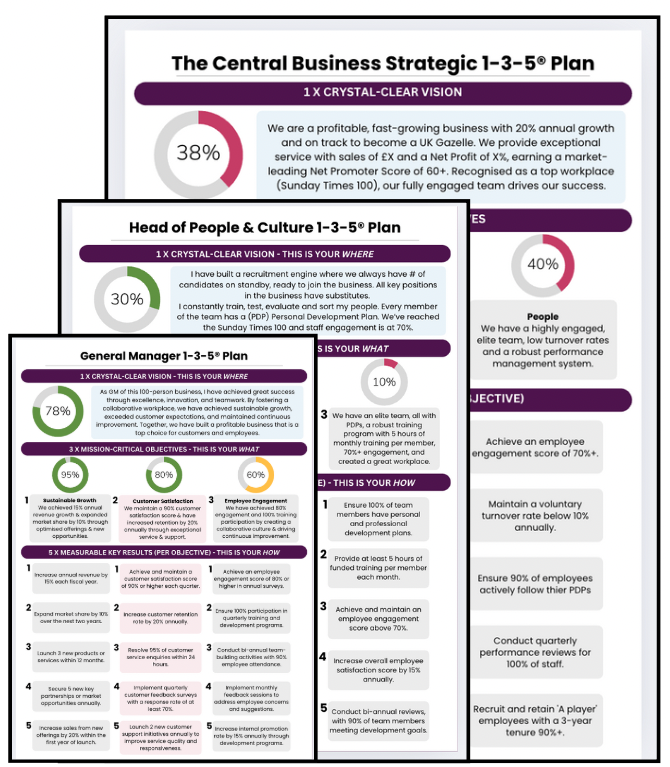
This is where platforms like Reclaro become valuable for scaling organisations. By aligning individual objectives with wider business goals, development becomes more intentional and easier to sustain over time.
Connecting Individual Development to Business Strategy
One of the biggest missed opportunities in many organisations is treating development as something separate from everyday work. Personal growth plans are often disconnected from business priorities, which makes development feel theoretical rather than practical.
The most effective organisations integrate the two.
For example, a company objective to improve customer retention may create opportunities for employees to strengthen communication and problem-solving skills. A strategic focus on operational efficiency may help team members develop leadership or process improvement capabilities.
When development is tied directly to meaningful business outcomes, learning becomes more engaging and immediately relevant.
Reclaro helps organisations connect company objectives, team priorities, and individual goals within a single system, ensuring that development is embedded into real work rather than treated as a standalone initiative.
Visibility Creates Momentum
Progress feels motivating when people can see it. Without visibility, improvement often goes unnoticed, and employees may struggle to recognise how far they have come.
This can gradually reduce motivation and engagement, particularly in fast-paced environments where attention quickly shifts to the next challenge.
By consistently tracking progress and goals, organisations create a clearer sense of momentum. Employees gain visibility into what they have achieved, where they are improving, and what they are working toward next.
Reclaro supports this by providing real-time visibility into goals and progress, helping individuals stay connected to their own development journey while also understanding how they contribute to broader company success.
Making Feedback Part of Everyday Work
Feedback is one of the most important drivers of professional growth, but in many scaling organisations it becomes inconsistent and reactive. Managers become busy, priorities shift quickly, and meaningful conversations about development happen less frequently.
As a result, employees may only receive feedback when problems arise, limiting its effectiveness and making growth feel uncertain.
Strong organisations build feedback into the rhythm of work itself. Regular check-ins create opportunities to discuss progress, challenges, development needs, and support requirements before issues become larger obstacles.
When feedback is structured, consistent, and tied to clear goals, it becomes more actionable and significantly more valuable.
Reclaro supports this through aligned goals and structured review cycles that make feedback a continuous process rather than an occasional event.
Developing Managers to Support Growth
As organisations expand, managers become increasingly important in shaping employee development. However, many managers are promoted because they performed well individually, not because they were trained to lead others.
Without support, managers may struggle to provide effective coaching, avoid difficult conversations, or focus entirely on short-term delivery at the expense of long-term development.
To scale successfully, businesses need to invest in management capability as deliberately as they invest in operational growth. This includes building skills around communication, coaching, performance management, and goal-setting.
Systems like Reclaro provide the structure managers need to lead effectively even as complexity increases, helping them support development in a more consistent and scalable way.
Balancing Challenge and Support
Growth requires challenge. People develop when they are pushed beyond their comfort zones and encouraged to take on new responsibilities. However, there is an important difference between healthy stretch and unsustainable pressure.
Too little challenge leads to stagnation, while too much creates stress and eventual burnout.
The key is balance. Organisations need to set ambitious but realistic goals while also providing the support, resources, and clarity needed to achieve them. Leaders must regularly assess workload, expectations, and wellbeing to ensure growth remains sustainable.
Structured planning and visibility make this balance much easier to maintain.
Creating a Culture of Continuous Improvement
High-growth organisations do not treat development as an occasional initiative or annual process. Instead, they embed learning and improvement into everyday culture.
This means encouraging curiosity, recognising progress, and creating an environment where experimentation and learning are valued. It also means making knowledge - sharing a normal part of how teams operate.
When development becomes integrated into daily work, growth feels continuous rather than something employees need to pursue separately.
Scaling Your Systems Alongside Your Team
Informal processes may work well for a team of ten people, but they rarely hold up as organisations continue to grow. What once relied on quick conversations and shared context eventually requires more structure and consistency.
To maintain alignment and performance at scale, businesses need systems that support:
- Consistent goal-setting
- Structured communication
- Repeatable meeting rhythms
- Transparent performance tracking
Reclaro provides the infrastructure to scale these processes effectively, helping organisations maintain clarity and alignment as teams become larger and more complex.
Growth Is a Shared Responsibility
Employee development should never sit solely with HR or leadership. Sustainable growth happens when responsibility is shared across the organisation.
Leaders provide direction, managers create support and accountability, and individuals take ownership of their own progress. Systems play a critical role in enabling this collaboration by making goals, expectations, and progress visible to everyone involved.
When development becomes part of how the organisation operates, growth becomes far more scalable and consistent.
Scaling Your Business Means Scaling Your People
Growing a business is not just about increasing revenue, headcount, or market reach. It is about increasing capability across the organisation.
When people grow alongside the business, performance improves naturally. Teams become more confident, leadership strengthens, innovation increases, and the organisation becomes more resilient over time.
But this does not happen by accident. It requires structure, visibility, and a deliberate focus on development.
By aligning goals, supporting feedback, and embedding development into everyday workflows, platforms like Reclaro help organisations create an environment where both people and business performance can scale together.
Because sustainable growth is not only about scaling operations.
It is about scaling people.
If you want your team to grow as confidently and consistently as your business:
👉 Explore Reclaro’s templates to align goals, support development, and build a high-performing organisation designed for long-term growth.