
Last updated 12 March 2026 ·


Measuring team performance is one of the most critical tasks for any leader, but it’s also one of the trickiest. Too little oversight, and projects drift off course. Too much oversight, and you risk creating a culture of micromanagement, stifling innovation, and demotivating your team. For fast-growing organisations and scale-ups, finding the balance between accountability and autonomy is essential. The key lies not in controlling every action but in building a system that makes performance visible, measurable, and meaningful - without hovering over every decision.
This blog explores how to measure team performance effectively, avoid micromanagement, and create a culture of trust and engagement, with practical ways to leverage systems like Reclaro to track progress, align priorities, and drive results.
Why Measuring Performance Matters
Performance measurement is more than a management checkbox. It impacts:
- Team motivation: People feel motivated when they know how their work contributes to outcomes.
- Goal alignment: Measurement ensures that team activities support organisational priorities.
- Decision-making: Leaders can make informed choices about resources, strategy, and development.
- Continuous improvement: Visibility enables learning and course correction before small issues escalate.
However, the wrong approach can have the opposite effect. Focusing solely on outputs or using intrusive methods creates stress, disengagement, and turnover. Micromanagement is often a symptom, not a cause. It usually emerges because leaders lack clarity on priorities, or because measurement systems are either missing or poorly designed.
The Cost of Micromanagement
Micromanagement can be subtle or overt, but the impact is the same:
- Employees lose autonomy, ownership, and confidence.
- Teams become risk-averse and hesitant to innovate.
- Productivity suffers because energy is spent on reporting, rather than executing.
- Leadership time is wasted monitoring instead of enabling.
Ironically, micromanagement often stems from a desire to ensure high performance - but it almost always undermines it. A better solution focuses on outcomes, clarity, and accountability, rather than controlling every action.
Focus on Outcomes, Not Activity
One of the most effective ways to avoid micromanagement is to measure results rather than actions.
- Outputs: What tangible results has the team delivered?
- Impact: How have these results moved the business forward?
- Quality: Are the outcomes meeting agreed standards?
- Collaboration: Are teams effectively working together to achieve these results?
By shifting the conversation from “Did you do this task?” to “What did this achieve?” leaders encourage autonomy and ownership while still maintaining insight into performance.
Use Clear Goals as Your Guiding Star
Goals provide focus and alignment. When teams understand what matters most, leaders don’t need to watch every step.
- SMART goals: Specific, Measurable, Achievable, Relevant, Time-bound objectives provide clarity.
- Transparent objectives: Sharing goals across teams ensures everyone knows what success looks like.
- Alignment: Each team member’s work should directly contribute to larger organisational objectives.
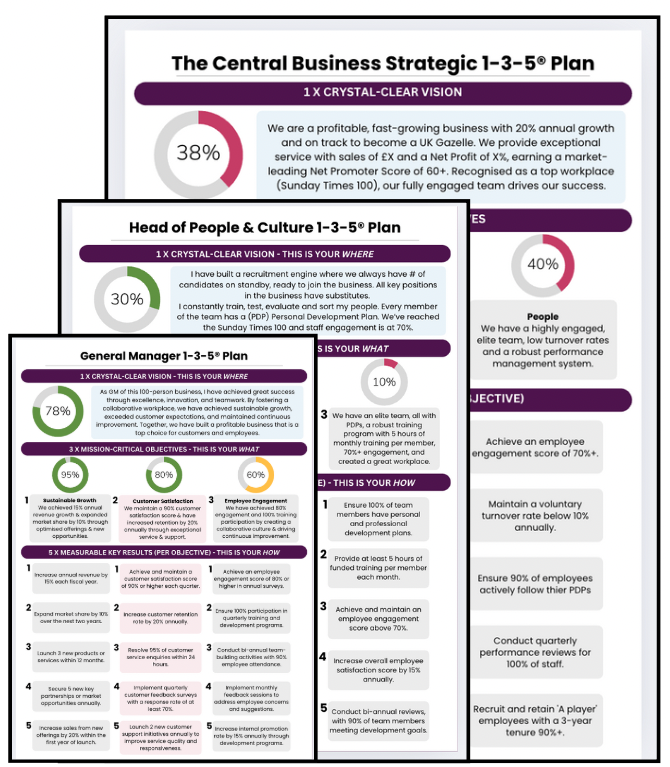
Systems like Reclaro make goal visibility effortless. With strategic objectives, team OKRs, and individual priorities visible in one platform, leaders can see progress at a glance without constant check-ins.
Structured Check-Ins Replace Micromanagement
Regular, structured check-ins are far more effective than informal, reactive monitoring. They allow leaders to:
- Review progress and blockers
- Align priorities if circumstances change
- Provide timely feedback
- Encourage collaboration and problem-solving
Short, focused meetings prevent micromanagement by creating predictable opportunities for alignment, rather than sporadic interruptions that disrupt workflow. Reclaro’s meeting templates make these check-ins simple to run. Agendas, progress tracking, and meeting notes are all in one place, keeping teams accountable without unnecessary oversight.
Leverage Metrics That Empower, Not Punish
Metrics should inform, not control. The right performance indicators:
- Are visible to the team, leading to shared accountability
- Focus on impact, collaboration, and progress
- Encourage learning from mistakes, not penalising them
- Support continuous improvement
For example:
- Instead of tracking hours worked, track the completion of strategic milestones.
- Instead of monitoring every code commit, track feature delivery and adoption.
- Instead of measuring every support ticket handled, track customer satisfaction and resolution efficiency.
Reclaro allows teams to track meaningful metrics in real time, giving leaders the data they need while empowering individuals to self-manage their work.
Feedback and Recognition Drive Engagement
Measurement alone isn’t enough. How leaders communicate insights from metrics determines whether motivation thrives or fades.
- Constructive feedback: Focus on outcomes, not blame.
- Recognition: Celebrate progress and effort, not just results.
- Actionable insights: Offer suggestions for improvement rather than vague criticism.
Using a system like Reclaro, leaders can record progress, celebrate wins, and provide feedback directly within the platform, embedding a culture of continuous improvement.
Balancing Autonomy With Accountability
True autonomy comes with responsibility. To avoid micromanagement:
- Set clear boundaries and expectations
- Define decision-making authority
- Provide tools and systems to self-monitor progress
- Encourage peer accountability
When people know their responsibilities, have clarity on goals, and can track progress independently, they deliver without oversight. Reclaro provides all of these capabilities in one central system - combining goal alignment, progress tracking, and review workflows to create autonomous, accountable teams.
Avoid Common Pitfalls
Even with a system in place, leaders can fall into micromanagement traps. Key pitfalls to avoid:
- Overly granular metrics: Track outcomes, not every task.
- Frequent ad-hoc status requests: Replace with structured check-ins.
- Delayed feedback: Immediate or timely reflection is critical.
- Failing to empower teams: Tools alone aren’t enough without trust and authority.
By focusing on alignment, visibility, and structured communication, leaders prevent these traps and create high-performing, engaged teams.
Measuring Performance Without Micromanaging
Measuring team performance doesn’t have to be controlling or intrusive. When leaders focus on outcomes, clear goals, meaningful metrics, structured check-ins, and feedback, teams thrive. Platforms like Reclaro make this easy by providing a single source of truth for goals, progress, meetings, and performance tracking. Leaders can see what matters without hovering - and employees can take ownership of their work with confidence.
By building systems that emphasise clarity, autonomy, and accountability, businesses can improve performance, reduce burnout, and create teams that are motivated, engaged, and aligned. If you want to measure performance effectively without micromanaging, start with the right system.
👉 Explore Reclaro’s templates to structure check-ins, track goals, and keep your teams aligned and motivated.